
The Sock That Started a Brand
A former architect on why she started designing socks for her sensory-sensitive son, and how that grew into a full sensory-friendly clothing brand.
Featuring An Luyten | Founder of Blusss

About this episode
An Luyten spent years designing buildings before she started designing socks — specifically, socks her own sensory-sensitive son could stand to wear. That single problem became Blusss, a Belgium-based brand built around sensory-friendly clothing and regulation accessories: seamless socks, base layers, fidget hoodies, weighted pieces, and a scented, thermochromic "mood-magic" sleeve. An estimates that roughly one in three people deal with some degree of sensory sensitivity, and the conversation draws a clear line between her architecture training and how she now designs for the body, treating softness and calm as a kind of universal design language.
The conversation
You know that moment in the morning when you are already running five minutes late, your kid is dressed, shoes are on, and then everything falls apart because of a sock. Not a metaphor, an actual sock.
If you've lived that, or if you are that kid, the one who couldn't stand the seam across the toe, the one who spent the whole school day distracted by the labels scratching the back of your neck, then this episode is for you.
Hi, I'm Tori and welcome to Curious By Design. This is a podcast about the hidden systems behind everyday things, the quiet decisions, the invisible chains, the stories nobody tells you, but that shape your life more than you think. This season, we are pulling on one thread. Fashion. Not trends, not aesthetics, the real stuff. Materials, labor, power, and what it actually costs to get dressed in the morning, beyond the price tag. So, let's get into it.
Today, I'm talking with An. A woman who started her career designing buildings and ended up redesigning something much more personal. How clothing feels on your body. She's the founder of Blusss, a Belgian brand making sensory friendly clothing and regulation accessories for people who are highly sensitive. And before you think that's a niche thing for a very specific group of people, I want to say upfront: roughly one in three people experience some degree of sensory sensitivity. So, statistically, this episode probably touches someone in your life. Maybe you, actually.
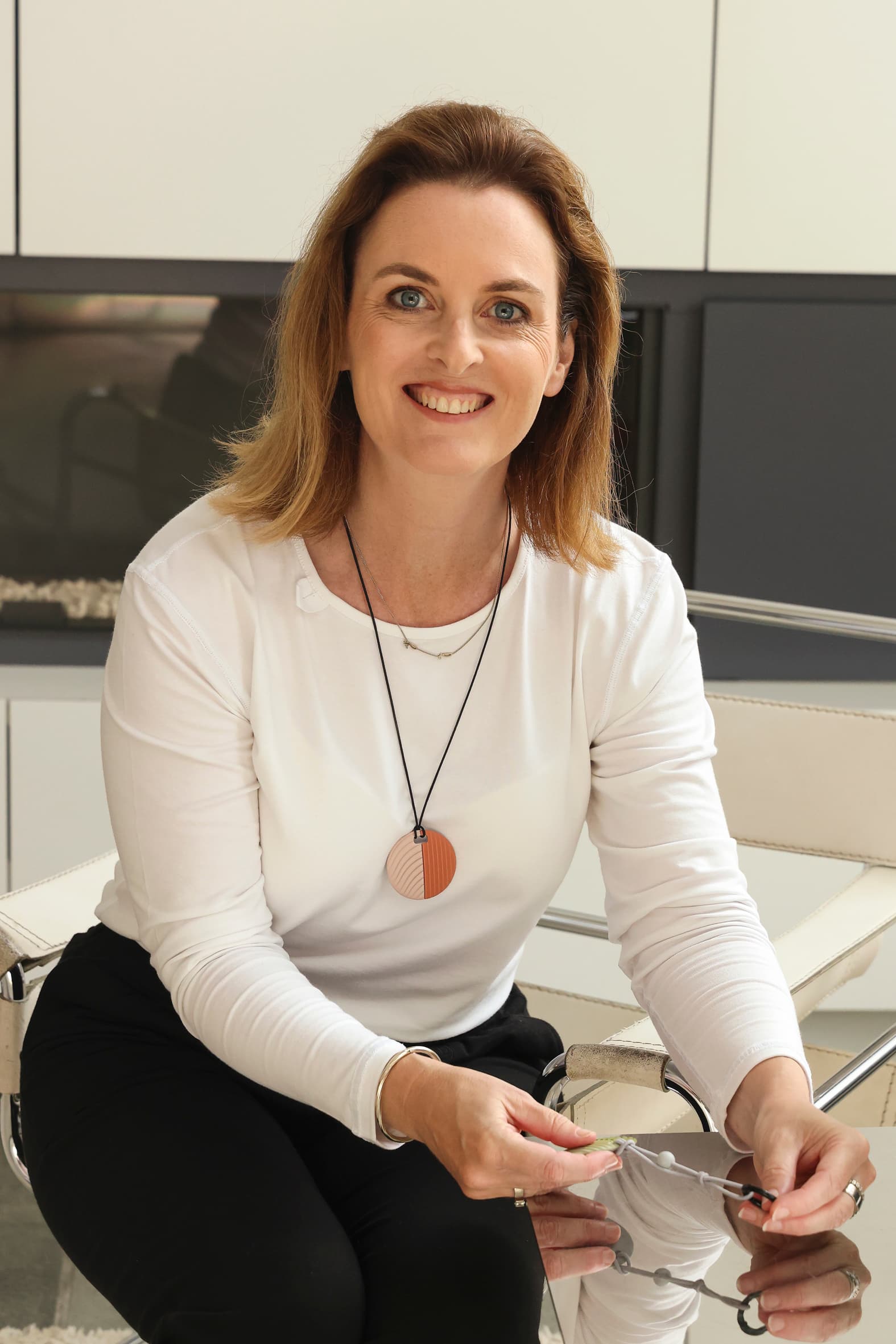
Dear An, I would like to ask you to talk a bit about yourself and your brand.
Hello, I'm An. I'm 45 years old. I'm from Belgium. I have two sons and I started with a brand named Blusss. With Blusss, we develop stylish solutions for sensory sensitive people. So that are sensory friendly clothing, but also accessories for stress regulation.
And you mentioned to me when we met that you started your career as a civil engineer architect. And I'm wondering what part of that world do you still carry into your business today?
Yeah, I think it's interesting because in architecture, you think about buildings. It's also a lot of components — the light, the space, all different things you take into account. And in social housing, you also want to make nice living spaces for people that have sometimes more difficult periods in their lives. And you want to make things that don't stand out, but a home where they feel very well.
And with Blusss, we do the same. We really start for sensory sensitive people from the starting point of how they feel, and how we need to adjust our designs so they can feel well in their clothing, and also that it looks stylish so that they don't stand out. They're just wearing nice clothing. So I think there's a big overlap between the two.
Do you take normal products and then change them to adapt to the needs that people have, or do you completely rethink and redesign based on what people need? How's your process?
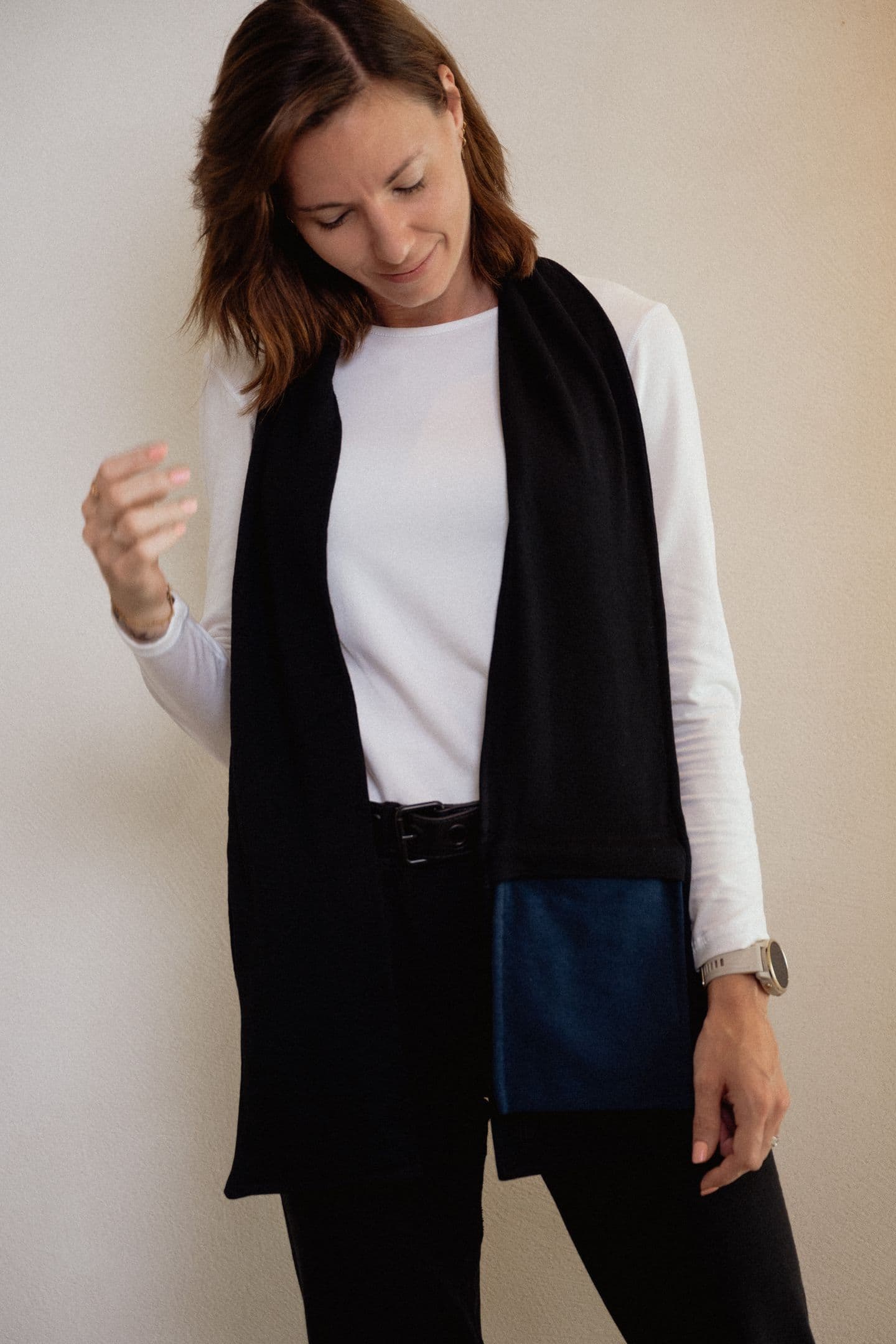
It's a bit different. Sometimes we see solutions, but we think, um, yeah, they really don't look nice. And we try to redesign them to be sensory friendly and looking stylish. But on the other hand, we also think out of the box about what can be helpful. So for example, we did a development of a product with smell, because therapists explained to me that smell is a really good hack: when you smell something that refers to a safe thought, your nose is directly connected to your brain, so when you go into stress or panic and you smell something you recognize as safe, you will directly calm down again and your stress will go away. So that's why we started thinking, also in collaboration workshops, about how to use smell in our products. And then from the workshops, we designed a scarf with a scented panel, where natural essential oils are encapsulated in the fabric. So only when you rub the fabric will you break the capsules and get the therapeutic effect from the essential oils.
So we did not start from the idea that we're going to design a scarf, but we started from smell — it can help people calm down, or when you have a panic attack or something, to really calm down. And how can we make something that you can use in daily life.
A scarf that you rub and it releases essential oils that calm you down. I mean, that's genuinely beautiful design. That's not a product, it's almost like a ritual you can carry with you. And what I love about the way you work is that the scarf was never the starting point. The feeling was. The need to feel safe was. The scarf came after.
Now, you mentioned that you yourself are highly sensitive and that your son is too. And I think for a lot of people listening, they might be sitting with that question: Am I? Or... Is my child? It's one of those things that often goes unnamed for years. So I'd love for you to talk about that a bit more. What does it actually feel like, and how would someone recognize it?
Sound. For me, a sound somewhere is not just a background sound, but it can really distract me all the time, whether it's in restaurants or at work. So that's something really difficult. Smell also — personally, I smell very well, and if there's a strange smell, it can also give me an overload, provide some problems.
And then for the clothing aspect, for my son, it was very difficult to find clothing in which he felt good. So we saw him pulling at his trousers. It was very difficult to find trousers, underwear, also socks — the first thing that happened when he came home was pulling those socks off.
So with my customers, I hear a lot of stories with children where it's very difficult to get socks on in the morning. It's a huge struggle. And at first, as a parent, it's a bit normal that you think, don't be so annoying, just put the socks on. But I also learned from therapists explaining it to me that when you're sensory sensitive, you really feel it all the time. It's not being difficult or something, but it distracts you all day long and it even prevents you from feeling safe. Whether it's a label in your neck annoying you all the time or socks, it prevents you from feeling safe, and that's the base thing you need to be able to grow and learn. And for me it was such an eye-opener to get that explanation from the therapists, that the impact is so much bigger than just refusing to wear socks or something.
So you found the need for this clothing type at home, and then you started with kids clothing, right? And then it grew internationally. And I'm wondering, what did you experience, or what gap did you see, that made you say, okay, now we need a bigger brand out of this?
It started very small with children's sizes up to 12 years, but then people started asking for bigger sizes. And from the moment we had bigger sizes, up to size 16 and 18, adults started buying it because they were looking for solutions for their children. And then they saw, oh, but I would also feel really great in these solutions. So that's how we made clothing for adults too.
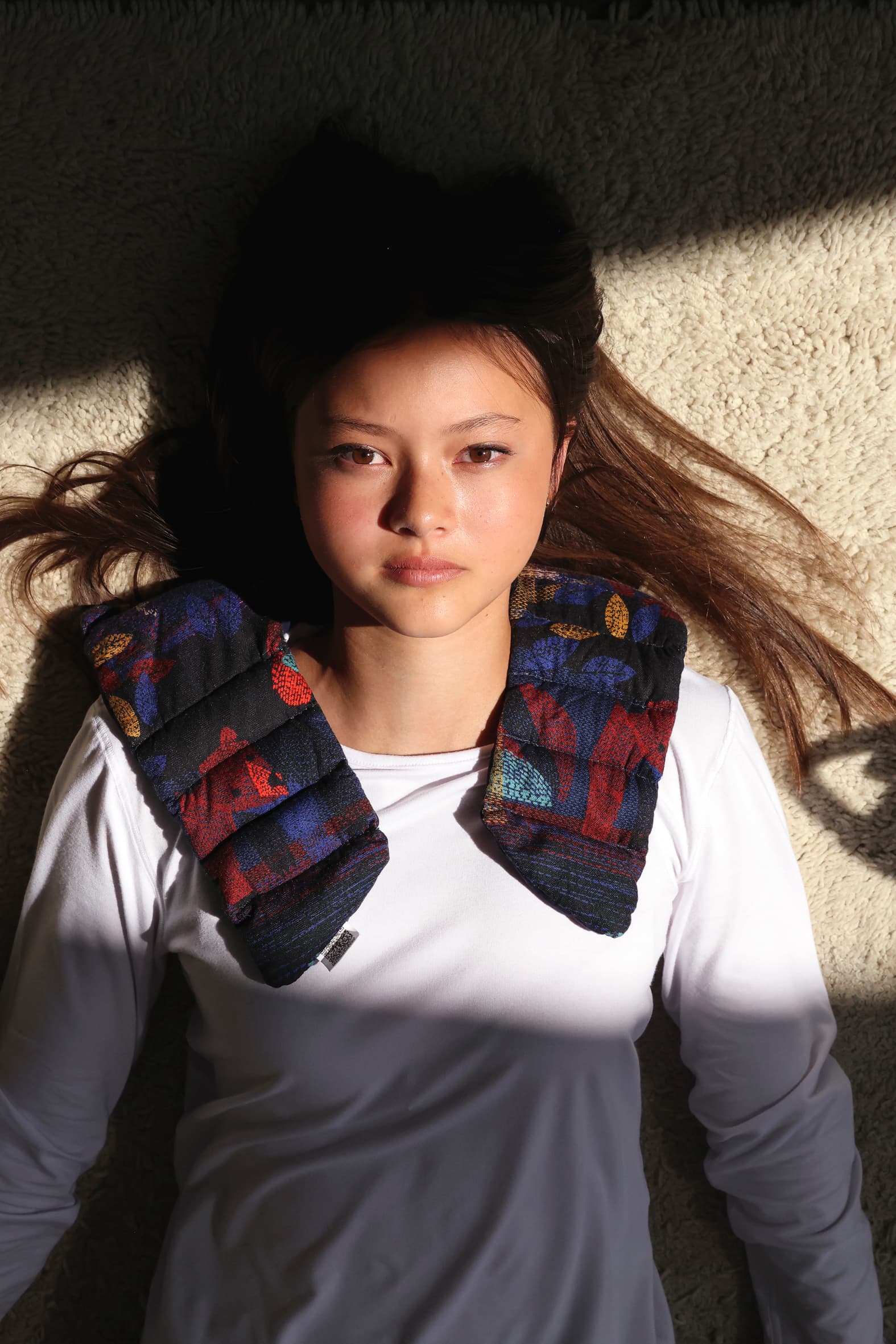
But also from the beginning, with the workshops and the co-creation with therapists, we learned that being sensory sensitive means you want soft base layers, but sometimes you also like something to regulate yourself. So that can be a fidget, or a chewy, or a weighted product. I'm also wearing my weighted collar now, because it's very calming. The deep pressure is like a hug, and it makes me talk more slowly — otherwise I'd be a bit more stressed. So it helps.
Very quickly, we found the combination of the soft base layers, but then also the accessories you can combine. If you are someone who likes to fidget, you can match it with those fidgets. So you can mix and match, and that's super interesting. And we hope to develop much more that can help sensory sensitive people in their daily life. Because I believe that when you get to know yourself, and you get to know how you can regulate yourself and not get overstimulated, then you really stay in your strength. Because for me too, when I don't regulate myself the way I do today, I'm stressed out at the end of the day. I'm super tired.
I cannot take any decisions anymore. I'm just almost having a meltdown at the end of the day. So it's super important.
We also want, with Blusss, for people to hear the stories and recognize themselves and start exploring things that can help them, and really prevent being so tired at the end of the day just from overstimulation. So we really hope that we can help people take a little step forward, and stay in their strength.
That phrase is doing a lot of work, and I think it deserves to be heard. Because that's really what this is about. Not fixing people. Not making them normal. But giving them the tools to function from their best selves instead of spending all their energy just coping. And what's interesting to me is that this need turned out to be everywhere. Belgium is just a small country, but Blusss reached people all over the world from basically day one. I'm curious about that. What did you learn from the different markets? What surprised you?
It was even a bit spectacular that from the beginning, we reached people from all over the world. Our website was in four languages, so people found us just googling for solutions. From day one we saw that people all over the world were experiencing the same problems — children refusing socks, or having problems with focus, or adults looking for softness. So we saw that the need was really worldwide.
But we also experienced that the way people talk about sensory sensitivity depends a bit on the country. There are countries where they are very open about it, and countries where they're starting to talk about it, but in a different way. With Blusss, we're just a brand with solutions for all people who are looking for comfort. So we don't talk much about specific labels or diagnoses, because a lot of people are just looking for comfort. That's also how we try to position the brand in different markets, and we see that it works. We talk about softness, about calming, soothing — those things are very recognizable for people all over the world.
Softness, calming, soothing. These words don't need translation, do they? I find it really clever, and also kind of radical, that you chose not to lead with a diagnosis or a condition. You lead with a feeling. And that opened the door for so many more people to walk through it.
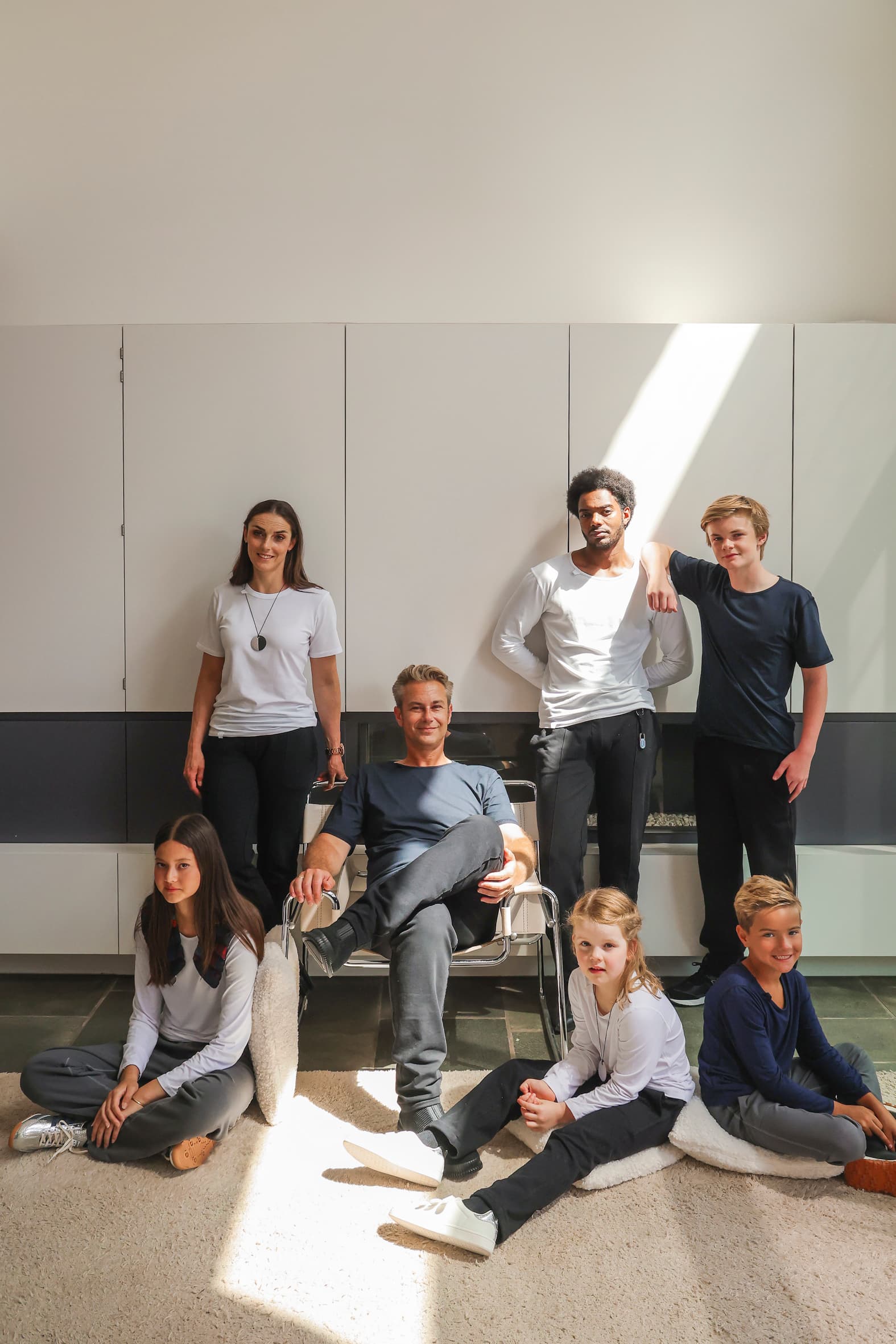
Okay, I want to get into the actual products now. Because honestly, I think people are going to want to know exactly what exists. Can you walk me through what Blusss offers?
There is the classical clothing and accessory categories, and we also have a shop-by-need category, where you can just find a solution based on the need you're looking for.
For the classical range, we have socks that are seamless and super soft, and easy to put on. They're really our best seller, because I hear it's such a nice solution for everyone who hates socks.
And then we have the underwear category, where we have boxers, girls' briefs, and tops.
We also sell those base layers a lot, because it's the first thing that's on your skin and it really gives a calming feeling. We even have stories about girls refusing to wear briefs where it just works with our products. So it's really, really nice to provide those solutions.
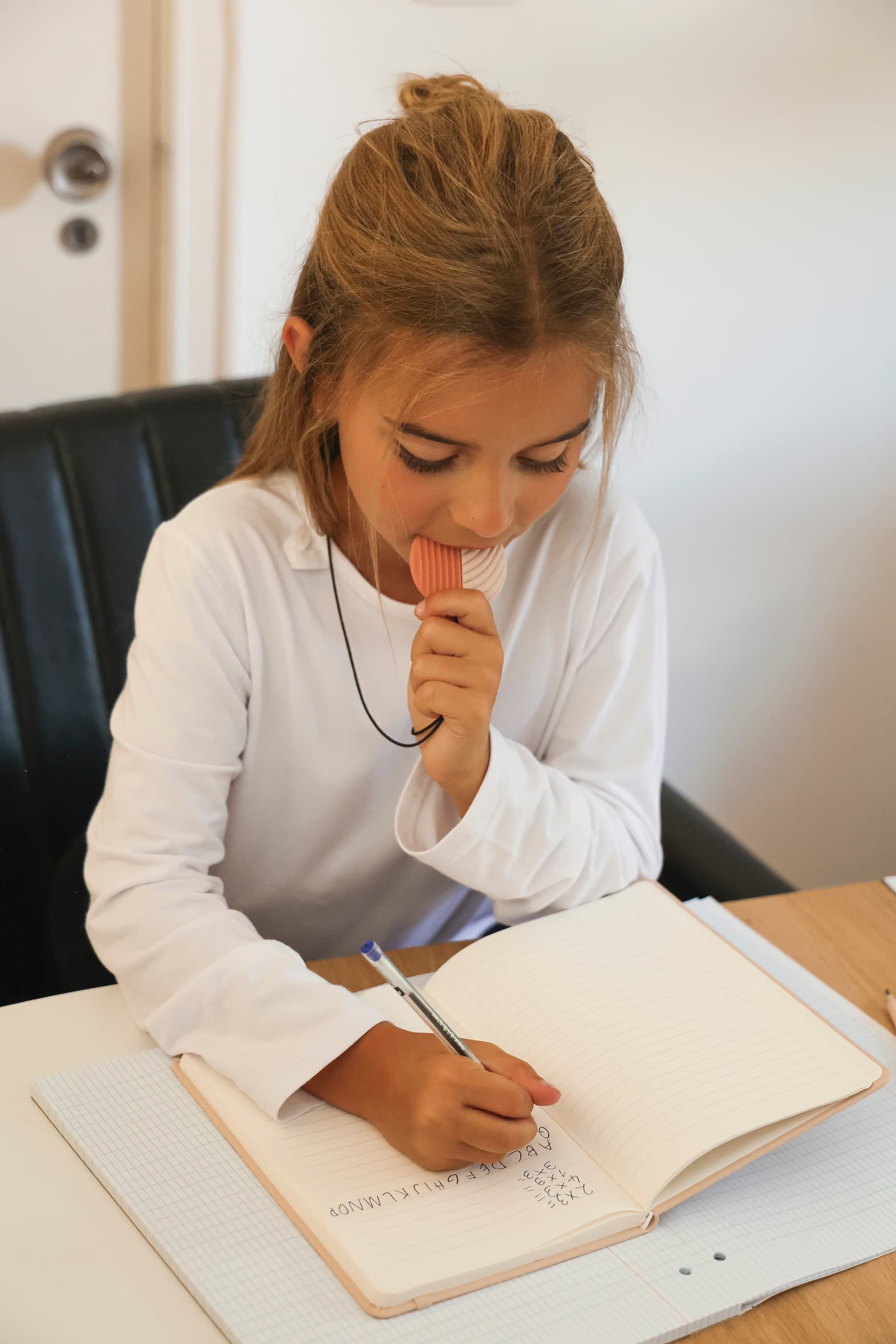
And then we have the top layers — the t-shirts, the trousers, and the hoodies. With the hoodies, we combine the soft base layer with solutions for regulation. For example, our fidget hoodie has a bead in the drawstring, so you can move it up and down as a movement that regulates and releases stress. You don't see it, you don't hear it, it's super subtle. And in the pockets, we provide loops you can hook extra accessories onto, if you like.
So we always try to make the soft base layer for everyone, and then, depending on what you like, you can add accessories.
Also, the collar is separate — when you like deep pressure, you can add it. And then for accessories, we have our chewies, which I love a lot because they're really stylish too.
So the chewies, and then the fidgets — we have classical stress balls, but also a new design of a stress ball, like a zipper puller that doesn't stand out. It's just like a zipper puller, but it's actually a stress ball.
And then we have the weighted solutions, like the weighted collar, and also a weighted belt bag.
And then the solutions with smell — the scarf, which I told you about.
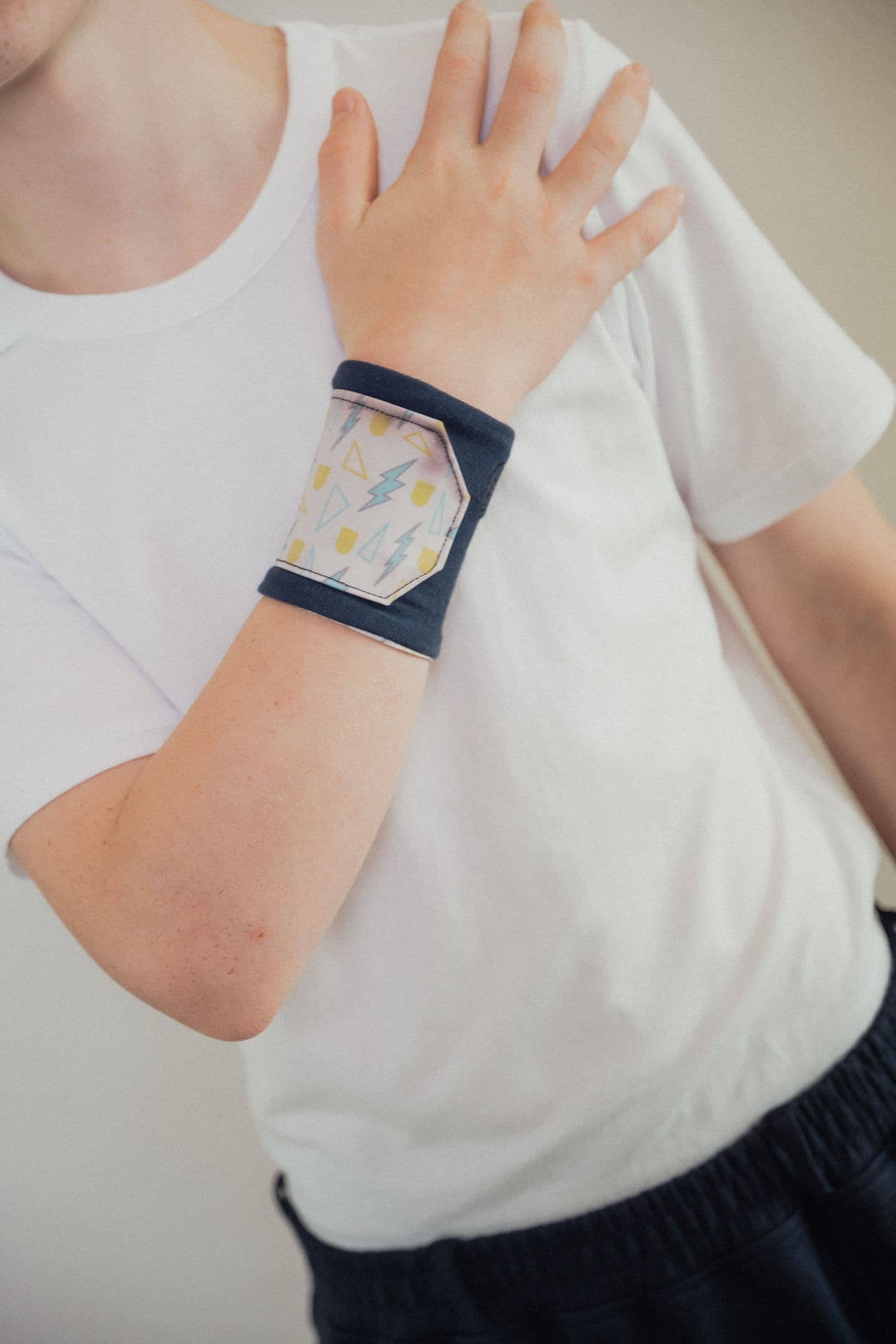
And then we also have a really nice solution for subtle communication. For children who have trouble expressing themselves — like 'I need help' or 'I need to go to my quiet place for a minute' — the idea was: how can we prevent a meltdown, by letting them give a very subtle signal to their teacher or parents?
That was also co-created in a school with special needs, with the teachers and the children. And we worked with a thermochromic fabric.
So it's a sleeve, the mood-magic sleeve. And when you put your warm hands on it, a print becomes visible. That's the secret message the teacher knows — they have the agreement that when the child does that, it means they need help, or they need to go to their quiet place.
And it really prevents them from escalating into a meltdown, which takes a lot of time to calm down from. So it gives them a tool to express themselves. That's how we ended up with a lot of different things in our range. And I really like this scarf — it smells so good.
I want to ask, if you had to pick one piece that best explains your brand to someone who has never heard of sensory-friendly fashion, which would it be?
I think I would say the fidget hoodie, for kids and adults, because it's the combination of softness — it's super soft inside — with the option of the fidget bead for regulation, and the option to add accessories. So in that one product you have both the sensory-friendly clothing and the accessory option for regulation. I'd say that one.
So cool. You said that sensitive people aren't too weak for the world, but the world is too hard for their strength. Could you maybe speak more about that?
Yeah. I think we live in a world today where there's so much stimuli from everywhere — sound, light, our phones, all the blinks on our phones everywhere. And I think it's really important that we find ways for sensory sensitive people to manage those situations, because today it's such a pity that a lot of talent is thrown away, because people get overstimulated and aren't in their strength.
So with Blusss, we try to be part of that puzzle — part of the solution — by providing soft base layers that are really calming and tools for regulation, but also by taking our role in recognition, so that in workspaces too, people would recognize it more and find solutions together. Highly sensitive people, or sensory sensitive people, have a lot of talent. They notice more. They feel everything much sooner. So if you can keep those people in their strength, you have such a talent. I find that really important — empowering people.
I did a bit of research and I saw that a third of people are actually highly sensitive. Do you have a vision for the future — what would a fashion industry look like that is inclusive for those people? Do you imagine more products like yours in the market, or is there something else you think about?
Yeah, I think it's a bit of a utopia, a bit of a dream. I don't know if it will happen that all brands will design like we do, from the starting point of sensitive people. Because you always have the problem that making the products this way is more expensive than making standard clothing. With our clothing, both the inside and the outside have a really nice finish. Production companies aren't used to that — they'll give you a nice outside, but the inside is just a mess of loose threads and seams. So the price point will always be an issue. And I don't think all fashion brands will do it, because that would be a dream, but I hope more will, because often, with our products, you don't even see what we've adjusted, you feel it. So you really need to understand your audience well — it's not something you can just design and assume will be good. So I don't think all brands will do it in the future, but I hope some more will, because I think a lot of people really enjoy the comfort of it. And when you design for sensory sensitive people, everyone likes it, because it's comfort for all.
And I think that's also why what you're doing feels so urgent, not niche, urgent. So let me ask you about the design process itself, because I want people to understand how much thought goes into each piece. How do you brief your team, how do you make sure that something that feels like a normal hoodie on the outside is actually doing something completely different on the inside?
When we start a new development, it often starts from a mood board I make with things I've seen, and then I try to explain what I think it can become. I also highlight the points I know are important, from being sensory sensitive myself and from my experience with my son.
But depending on the kind of new product, I also have a big network of therapists and experts, so I always ask them: 'I have this idea, what do you think is important to take into account?' So it's often a collaboration, taking their ideas with us. Then we start designing and making samples and testing with different people. And I always say, when three people say it's nice, it's okay, it works, and we stop adjusting. I always say I want it to work, and I want it to look good — so I want both. If either one isn't okay, if it doesn't work, we don't do it. And if it's ugly, we also don't do it. That's a bit how the process goes at the moment.
I'm wondering, how long does it take from the mood board to the product getting out into the world?
It depends a lot on the type of product. The new product with the thermochromic fabric and the smell took nine months, because it involved the collaboration and co-creation workshops, but also the technical part — we went to the lab for testing, to figure out how to make the fabrics. So it was doubled: a design process, but also a technical one, and then you also need to find production companies that can make it. If it's simpler, if it's just an existing product in a different color or design, it goes much quicker, because you already know the construction and how you're going to produce it.
But really new products always take more time than you hope.
And you produce in which country?
It's different. For clothing, most is produced in Turkey. Our socks are made by a Romanian family company that really thought with us about how to adjust their production process. We have some accessories made in Poland, in a small atelier. And we have some Belgium-made products, like the weighted collar, made in Belgium. And only our chewies, our silicone products, are made in China, with a company that makes silicone products for babies and has all the certificates to make safe products you can put in your mouth.
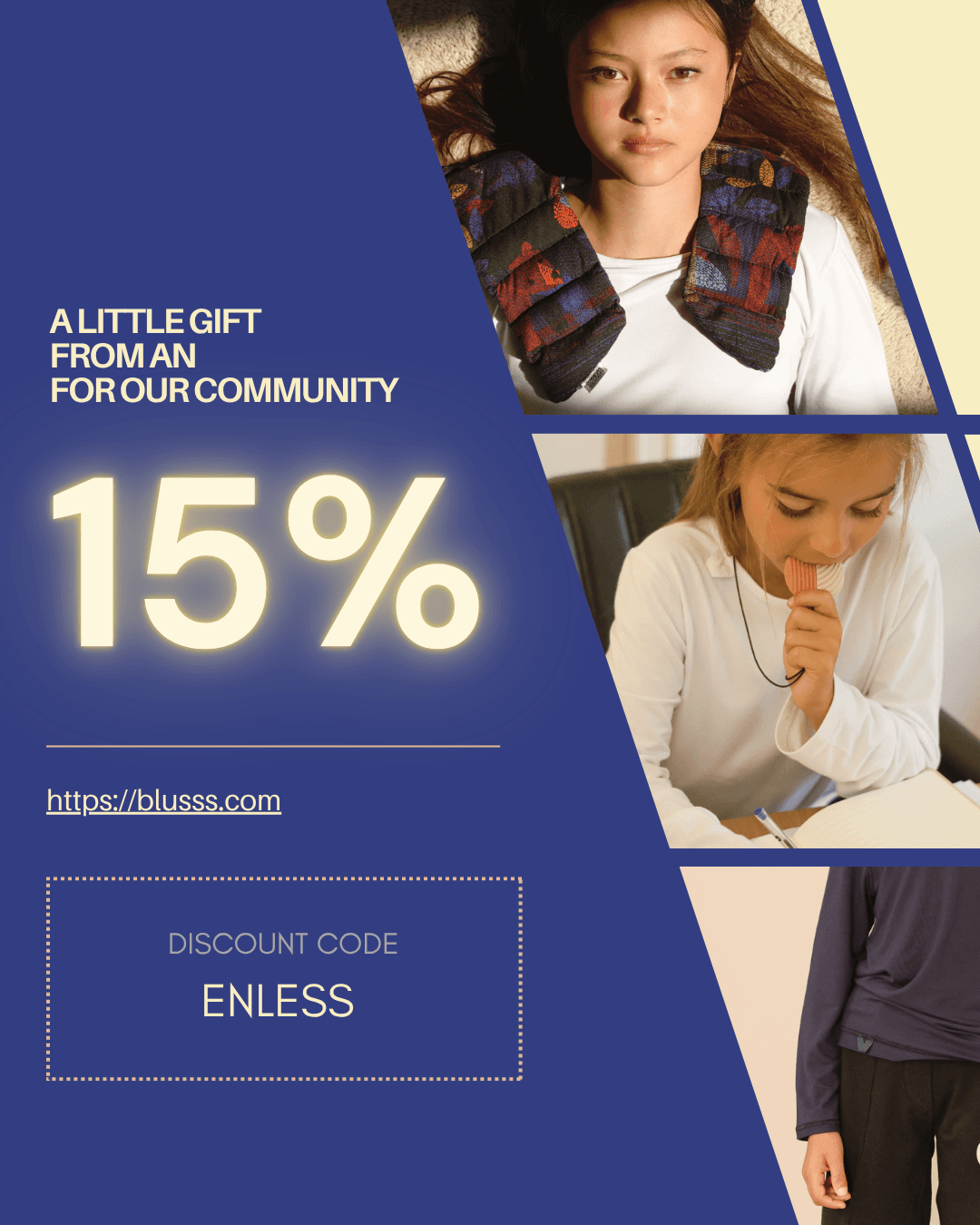
For everyone who got curious, we also have a discount code for you: ENLESS for 15% off.
Fashion has a huge problem. It produces more emissions than all international flights and shipping combined. It pollutes water, trashes unsold clothes, a truckload every second.
And while that sounds distant, the truth is it's driven by us. We own more than ever, yet feel like we have nothing to wear. We buy more to fix that feeling and the cycle repeats. I know because I've lived it. Closet full, nothing to wear, stress before school, work, events. I thought clothes were identity, expression. And they are. However, not the way fast fashion has taught us.
It's a system design failure. Most people wear only 30% of their wardrobe. And 61% still say they struggle to find something to wear. That's why I'm building a styling app. My app helps you preserve the stories in your wardrobe by styling what you already own, buying only when it truly makes sense.
I'm wondering, for someone listening who recognizes themselves as highly sensitive but doesn't know where to start, do you have some things they can change in their wardrobe tomorrow to feel calmer?
Yeah, then I would say... start with a soft base layer, whether it's an underwear top or a t-shirt. It's super calming — I'm almost always wearing the Blusss t-shirts myself. But on a day I don't wear it, I really notice it, it's such a big difference. So a soft base layer, I would suggest starting with. And then when you choose fabrics, go for natural fabrics, because with something synthetic you'll start sweating and your regulation won't be as good, you won't feel well. So natural fabrics are super important. And then it's a matter of testing what you like for regulation — test deep pressure, test fidget things, test smell. Just test what works for you. I would say go out and test everything you can.
There is a thing that happens sometimes in conversations where someone says something and you realize it applies to you. And you weren't expecting it. That happened to me too, a few times talking to An. The part about being exhausted at the end of the day, not from what you did, but from what you felt all day long and tried to ignore. The part about safety being the foundation. The part about designing from the feeling first.
I think a lot of us have been adapting to a world that was never really designed with us in mind. And most of the time we don't even notice. We just call it being tired or being overwhelmed and move on. What An is building with Blusss is small in scale right now, but the idea behind it is huge. That comfort is not a luxury. That feeling okay in your body is not too much to ask for. And that when you design for the most sensitive people, you end up making something better for everyone.
If something in this episode made you stop and think, good, that's the whole point. Curious by Design is about finding the story behind the obvious one. And fashion? It's got layers, literally and figuratively. Every episode this season pulls on a different thread. I promise you, it unravels fast. And if you like this, share it with one other person who would never expect to find themselves genuinely gripped by a conversation about clothing. Those are my favorite listeners. Stay curious and I'll see you next time.