


What is the hardest part of building your amazing startup while working full-time, studying, having a second job AND maintaining a personal life? Strangely enough, for me it's not about having too much to do, as I really enjoy being busy and creating value. It's more about every part of your life needing a different version of you. So you constantly try to fit five different lives and passions into one human being, while feeling that you have limited time and energy to give each one.
Just imagine: you've finished a full day of work. Maybe a lecture too. Your startup is always on your mind, and so is the guilt of not touching it again today. You come home exhausted but still want to work on something you believe in.
I've been there, and here are six things that kept me moving.
Pick one result per quarter

This is something I am still struggling with myself. And I relearn it again and again: with ten hours a week, you can't run ten projects. Pick one concrete result for the next three months, then break it into "sprints" of a few weeks, as we do in agile project management. "Talk to 20 potential customers" is a great goal that leads to an outcome. "Work on the startup" is a wish, which is not concrete and will probably only stress you out.
Write it down where you'll see it. Everything that doesn't move you closer to this result should wait until next time.
Where we can help
In a coaching session we pressure-test your idea and your next step together, so the one result you pick is the right one and is also followed up on.
Protect blocked hours, not free time
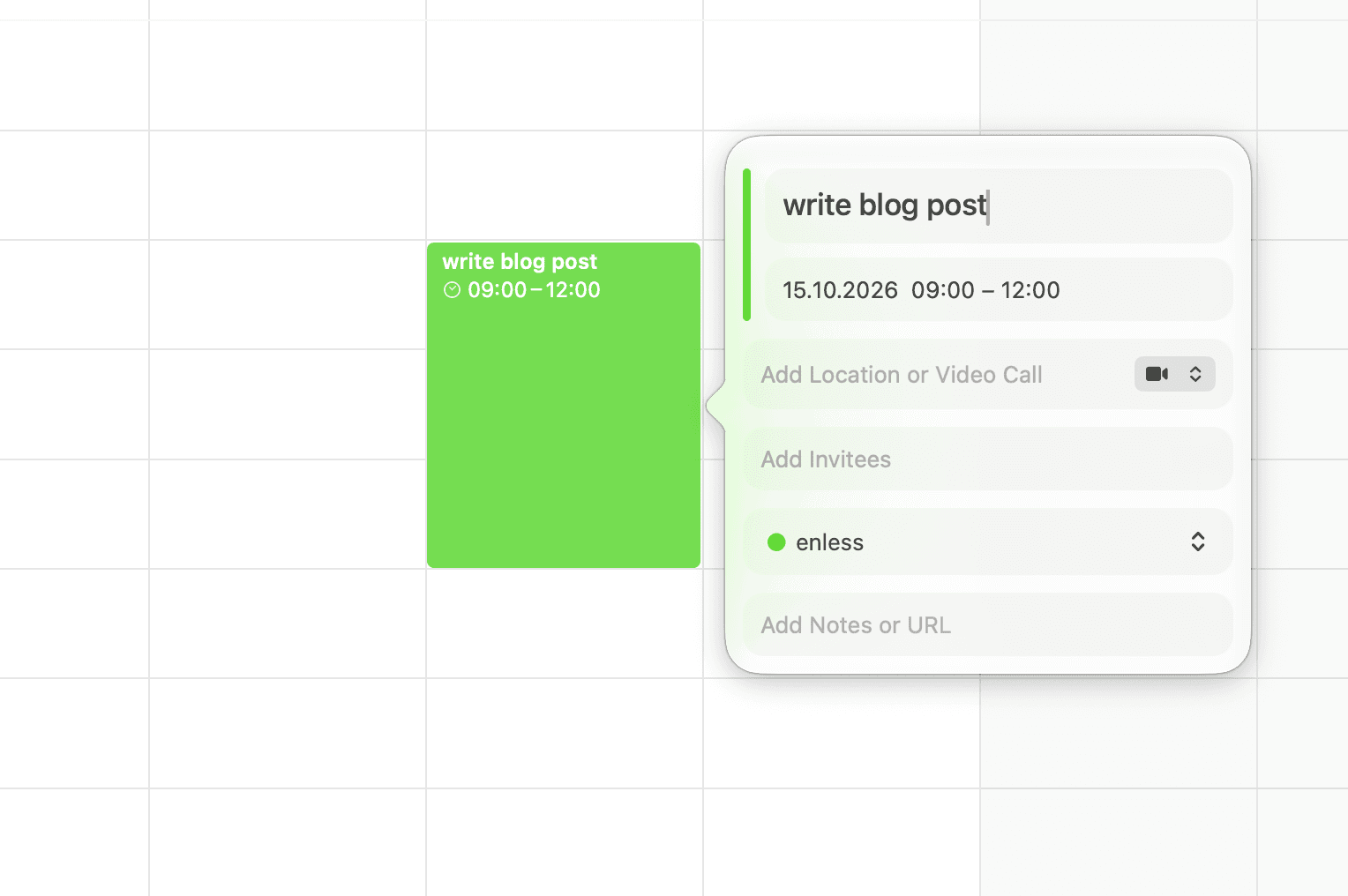
"I'll do it when I have time" means "I will never do it". Free time gets eaten by everything else. Fixed, blocked hours survive.
A habit you can steal from me: ignore to-do lists. Whenever you think of something you need to do, act as your own assistant. Open your calendar and put your task straight in as a time block, with a short description and the first steps. And forget it! When the time comes to do your task, don't spend even a minute judging whether you should do it or not. Just do it. Trust your assistant to know better ;) This time block is worth more than anything else you hope to have. You're having a meeting with someone important: yourself and your future.
Never start from a blank page

Pitches, funding applications, CVs, cold emails: most of what every founder writes has been written before. Starting from a good template turns a lost Thursday evening into an hour after dinner.
Where we can help
The course gives you the templates I actually used, for applications, pitches, CVs and managing time and stress, adapted to your situation instead of handed over as they are.
Talk to people before you build

Obviously, everyone will tell you to talk to the people you want to help before you build. Ask about their experience, not about your idea.
- What was the hardest part of that, the last time it happened?
- What did you try to fix it?
- What did that cost you, in time or money?
However, after you have validated your idea, don't make the expensive mistake of overthinking or reinventing the wheel. Before you build, talk to other founders or experts. Get feedback and ask about easier ways to achieve what you are striving for.
Apply for programmes and awards early
Startup programmes, awards and public funding calls give you money, mentors and deadlines. The deadlines matter most when you're busy, turning "a Monday" into "the Monday".
Apply before you feel ready. Most applications ask about what you've learned and your attitude, not what you've accomplished. And every rejection improves your next draft.
Where we can help
enless grew this way too: we applied early and won the Audience Award and the Digital Future Award. In coaching, we look at which programmes fit you and get your application ready together.
Don't build alone

Building next to a job or studies can feel lonely. Your colleagues don't get it, and your friends are tired of hearing about it. Maybe change your friends. Or maybe you just need to meet more people who are in the same place.
Find a small group of founders and meet regularly. Share your wins and your problems. Sometimes honest feedback from someone a few steps ahead saves you months and headaches.
Where we can help
The Founders Circle is that room: founders building alongside you, honest feedback and warm introductions from a network built across startups, industry and academia.
Start this week
You don't need to quit your job or change your life completely to begin. You need one result, a few protected hours and people cheering you on.
Which one will you set up this week? If you'd like help working out where to start, tell me where you're at. The first call is free, and you'll leave it with a clearer next step either way.